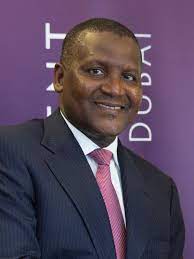
BUA Group has decided to being down the price of Cement effective October 2, 2023.
According to a statement from the Cement manufacturer, the organization decided to bring the price reduction forward rather than waiting till when its new production lines were completed as it had earlier promised.
Based on the latest development, the ex-factory price has now been fixed at 3,500 NAIRA per bag, ‘so that Nigerians can begin to enjoy the benefits of the price reduction even before the completion of the new plants’.
The statement further revealed that upon completion of the new plants which will increase BUA production volume to 17million Metric tons per annum, the company intends to further review downwards the price of cement by first Quarter of 2024 in line with earlier promise.
Ogun State Governor, Dapo Abiodun has put every necessary process in place to make the Ogun-Guangdong Free Trade Zone (OGFTZ), an impetus for foreign and local investors, the Coordinator OGFTZ, Dr. Abbey Onas has stated.
Addressing stakeholders in Abeokuta on his recent visit to Poland for an investment/economic forum, Onas said he was essentially at the international forum in his capacity as the Coordinator of the Ogun-Guangdong Free Trade Zone (OGFTZ).
“My mission on that foreign land was clear: to woo global investors to Ogun State, Southwest Nigeria. That meeting was the 32nd in the series of the Economic Forum that has become a tradition. It was a gathering of leading investors and economic giants that came with lots of opportunities,”
The coordinator said the body language of the new administration of President Bola Ahmed Tinubu so far speaks to its readiness to tap economic opportunities from across the world and open up Nigeria for business and investment, pointing out that the President has assumed the role of the Chief Marketing Officer of Nigeria and Africa, telling the global audience at every avenue that we’re ready for mutually beneficial partnerships.
“Most recently at the United Nations General Assembly, President Tinubu argued that Africa is not a problem to be avoided, calling the rest of the world to work with the continent as the key to the world’s future. His presentation at the session has been applauded as masterful.
“This body language of the federal government, in addition to the investment drive of Ogun State Governor Dapo Abiodun, is what I’ve seen and is motivating me to push for economic opportunities from across the world to the Ogun-Guangdong Free Trade Zone.”
Abbey pointed out that Governor Abiodun has made huge investments in critical sectors that attract and sustain investment in the state, especially in the area of road infrastructure, transportation, energy, security and others.
He has done creditably well in his first tenure, raising the hopes of the people that more will come in this second tenure. “In his determination to make Ogun State a major investment destination in Nigeria and by extension Africa, Governor Abiodun established the Ogun State Investment Promotion and Facilitation Agency. This government organ has the mandate to attract investors into the state; coordinate private sector investment activities, and streamline processes and procedures to ease investors’ experience in setting up their businesses in the state. That was a brilliant initiative whose positive impact has begun to manifest, as Ogun is now a state of interest for many investors.
Governor Abiodun has also supported this with the construction, reconstruction and rehabilitation of roads and road networks in the state. Over 400km roads have been touched by the Dapo Abiodun-led administration of Ogun State. This, no doubt, has changed the face of the state and eased transportation within Ogun. Good road networks are a major catalyst for investment. It’s exciting that Governor Abiodun has his eyes fixated on renewing road networks in Ogun State,”
Speaking on the measures being put in place to consolidate on protection of lives and properties in the state, the coordinator said the state government was aware of the place of security in attracting investment.
“Ogun people are generally peaceful and welcoming. They are always ready to extend the hands of fellowship to visitors. Governor Abiodun has also strengthened the security architecture of the state by keying into the Amotekun initiative of Southwestern regional governments in Nigeria. This is in addition to restructuring the Security Trust Fund of the state which has made it possible to mobilise resources for security personnel. The adoption of ultramodern security techniques such as drones and other sophisticated technology in surveillance and monitoring the state has prevented criminal gangs from gaining a foothold. The security of the state can always get better.
“Indeed, I’ve seen the investment drive of Governor Dapo Abiodun over the years, and it is really propelling me to make moves on my own to attract investment to the state. We have a Governor that has a growth and progressive mindset.
“So, at the economic forum, I made a case for Africa, Nigeria and Ogun State. This was even long before the President’s address at UNGA 78. My message was similar to that of the President. I told the session which has a global audience that Africa should not be seen as a challenging investment terrain. On the contrary, we have the presence of highly educated Nigerians and Africans eager to collaborate with global partners in achieving great feats.
“Some investors might want to wait to see how things pan out. However, this may be costly for them. It was my view at the economic forum that with the pace at which the present administration of President Tinubu is working on securing foreign investments, such category of investors might miss out on the available opportunities. The perfect time to invest in Nigeria is therefore NOW,”
Speaking further on the direct advantage of his recent trip to Poland, Onas painted a glowing picture of what on the 23rd of September, when a select number of accomplished Polish investors and seasoned CEOs from reputable companies in Poland and Europe from diverse industries arrived Abuja to usher in new possibilities and collaborations between Nigeria and Polland. He stated that the visit was a follow-up on the fruitful discussions had at the Economic summit and aimed at exploring investment opportunities and establishing fruitful partnerships within Nigeria.
In the final analysis, he called on investors to look inward and consider the opportunities in Ogun-Guangdong Free Trade Zone in Nigeria, which he said serves as a powerful reminder of the untapped potential in Africa’s rapidly evolving economic landscape.
“We are open for business and partnership. The Dapo Abiodun-led administration is making progressive policies and programmes that support investment and business in the state,” he added.
The Dangote Refinery, a significant undertaking in Nigeria, is enmeshed in new controversy. This time, there is tension between the Nigerian National Petroleum Corporation (NNPC) and Aliko Dangote, Africa’s richest man and owner of the Dangote Group, which has sparked concerns over the safety, quality, and ethics surrounding the refinery.
Inside sources have informed us that Alhaji Aliko Dangote has applied for a license to operate, which is the last step of approval before any refinery can start any form of production but NNPC, the regulatory body has hesitated to provide this license due to safety concerns, because the refinery remains uncompleted. He also approached the NNPC to purchase crude but the NNPC declined saying they cannot sell crude to a refinery that is uncompleted. It is now alleged that Dangote is trying to source Nigeria’s crude through trading houses which he would then import into Nigeria – a move that might be seen as ‘going through the backdoor.’
But even if he gets the crude, there are safety and quality concerns voiced by employees of Dangote, contractors, and some officials at NNPC. Without the completion of the refinery, there are concerns that the quality of jet fuel and diesel produced would be subpar. NNPC is anxious because substandard jet fuel and diesel could endanger lives. The refinery, as it stands, can only carry out the first phase of crude distillation which is similar to what illegal refineries operating in the Niger Delta region have been found to do. However, due to the complex nature of the Dangote Refinery, whose catalytic cracking unit is still uncompleted, the quality of the refined products is in question.
It is alleged that some staff within the Dangote Group have voiced their apprehensions regarding the move to start the refinery without its completion. Despite these valid concerns, Dangote’s response suggests a desperate need for the venture to work, potentially as a ‘matter of survival.’
Financial Strain biting hard?
Dangote is reported to be mired in significant debt, pushing the company to the brink of receivership if they don’t secure additional funds to repay certain loans by December. This financial pressure may explain why Dangote is so eager to secure a license to start operations, even with the refinery not being fully complete.
You will recall that earlier this year, the uncompleted refinery was hurriedly commissioned by the former President Buhari in order for Dangote to access additional equity funding from the Nigerian Government as well as a crude allocation of 300,000barrels per day which insiders say would have been sold to raise cash for creditors and partly fund the completion of the refinery. This crude allocation was however put to a hold when the new Government of President Tinubu was sworn in, and it was discovered that the refinery was far from being complete but was falsely commissioned in order to take the crude allocation and sell outside the country.
The standoff between Dangote and the NNPC underscores a broader issue of safety, quality, and financial security that have bedevilled the Dangote refinery project. With concerns over substandard products potentially jeopardizing lives of workers at the uncompleted refinery and nigerians in general, and a major business figure risking immense financial losses, the resolution of this impasse will have far-reaching implications for Nigeria’s oil industry.
The 650,000 barrels per day Dangote Refinery is yet to begin production after the August commencement date, earlier announced by the President, Dangote Group, Aliko Dangote.
While delivering his speech at the official commissioning of the refinery by former President Muhammadu Buhari in May, he said, “Your excellencies, distinguished guests, our first product will be in the market before the end of July or beginning of August this year.”
However, no drop of refined petroleum product from the refinery has hit the market weeks after the promised production deadline, according to findings by The PUNCH.
Spokesperson for the Nigerian National Petroleum Company Limited, Garba Deen in June, said that the company would cut down its fuel imports programme in August, once the Dangote Refinery began to push out refined petroleum products latest August.
A top source among the Major Oil Marketers Association of Nigeria also confirmed that NNPCL had cut down importation.
Corroborating Deen, while speaking to journalists after a meeting with oil marketers in Abuja, also in June, the Chief Executive, the Nigerian Midstream and Downstream Petroleum Regulatory Agency, Farouk Ahmed, also said NNPCL had cut down on importation.
Officials of the Communications Department of Dangote Refinery could not speak on the matter as of press time.
However, a source at the refinery told The PUNCH that the management was unsure of when petrol refining would begin at the Ibeju-Lekki facility.
The source who was not authorised to speak said, “For now, the management has not come out with any official date.”
The President, Petroleum and Natural Gas Senior Staff Association of Nigeria, Festus Osifo, advised the Federal Government to focus on completing the Port Harcourt refinery rather than focus on the Dangote refinery.
He said, “We should rather focus on making other refineries work because it would cut down on freight rates from importation, and would reduce prices. Dangote is a private businessman and can decide tomorrow that he would not refine again, although the government has a 20 per cent stake in the refinery. We should rather push for our own refineries, and ask the government the question such as; when is the Port Harcourt refinery going to start refining petrol?”
The National Controller Operations, the Independent Petroleum Marketers Association of Nigeria, Mike Osatuyi, also said there was no cause for alarm as far as petrol supply was concerned as the NNPCL was still importing.
According to him, management of the Dangote refinery may have delayed production, due to some internal challenges.
He also advised the Federal Government, to ensure that other local refineries come on stream rather than depend on the Dangote refinery.
Aliko Dangote, Africa’s richest man, is facing mounting criticism from Nigerians questioning the fairness of his business empire.
With a total of 15,200 tweets at the time of this report, Dangote Group’s leader has come under public scrutiny for the reported disparities in the prices of his cement products across Africa.
According to X (formerly Twitter) discussions, there are claims that the billionaire offers cement to other African nations at a more reasonable cost.
A user on the X platform, Nefertiti, pointed out that despite Dangote Cement’s production in Nigeria, it fails to offer the product at an affordable rate, prompting contractors to resort to importing it.
“Dangote Cement is more expensive than imported cement, & you have all the raw materials in Nigeria. Contractors prefer imported cement, but cement import is banned in Nigeria. You must use Dangote by force. This is for those waiting to buy cheap petrol from the Dangote Refinery.”
Dangote Cement is more expensive than imported cement, & you have all the raw materials in Nigeria. Contractors prefer imported cement, but cement import is banned in Nigeria. You must use Dangote by force. This is for those waiting to buy cheap petrol from the Dangote Refinery.
— NEFERTITI (@firstladyship) August 25, 2023
Another user, Abdullahayofel, emphasized that the cement company enjoys access to raw materials at minimal costs, giving it a competitive edge.
“Dangote cement is produced in Nigeria, The raw material is sourced locally in Nigeria at almost zero cost. Nothing is imported. Almost zero taxes yet the price of cement is 5,200 Naira in Nigeria and the same is sold in the Benin Republic at 3,699.15 Naira.
Dangote cement is produced in Nigeria, The raw material is sourced locally in Nigeria at almost zero cost. Nothing is imported.
Almost zero taxes yet the price of cement is 5,200 Naira in Nigeria and same is sold in Benin Republic at 3,699.15 Naira.
— A. Ayofe (@abdullahayofel) August 25, 2023
Kelvin Odanz added his voice, supporting the notion that contractors prefer imports due to the high local prices of the billionaire’s cement company.
“Apparently cement imported from abroad is cheaper than the one our sugar daddy and his clique produces in Nigeria. Contractors prefer importing it This is for those of you who think our sugar daddy’s refinery will help bring down the cost of fuel when finally completed. LOL for you”
Apparently cement imported from abroad is cheaper than the one our sugar daddy and his clique produces in Nigeria. Contractors prefer importing it
This is for those of you who think our sugar daddy’s refinery will help bring down cost of fuel when finally completed. LOL for you
— Kelvin Odanz (@MrOdanz) August 25, 2023
Captain Tango stated that Dangote relies on government support to drive the success of his business.
“Dangote is not the smartest politician, what he enjoys is government patronage thereby granting him crazy tax breaks and monopoly over the market. If INNOSON Motors or other businessmen have the same privileges he enjoys it will be good for all or throw the cement market open.
Dangote is not the smartest politician, what he enjoys is the government patronage thereby granting him crazy tax breaks and monopoly over the market.
If INNOSON motors or other business men have the same privileges he enjoys it will be good for all or throw throw the cement…
— Captain Tango ????????✈️⚓️ (@Capolutiti) August 25, 2023
A user, Priste added that the lack of a level playing field in the country has resulted in cement market monopolization
“The issue is basically the lack of a level playing ground. Using the government to stifle other competitors is what has gotten us to this level of monopoly. This same dangote cement is cheaper in other West African countries.”
The issue is basically the lack of a level playing ground. Using the government to stifle other competitors is what has gotten us to this level of monopoly.
This same dangote cement is cheaper in other west African countries.
The award will be presented to Mr Rabiu alongside other winners of the various award categories.
A business mogul and Chair of the BUA Group, Abdulsamad Rabiu, has emerged winner of the 2023 Man of the year Leadership Excellence Awards.
In a seven-day Leadership Excellence Awards voting by Nigerians via online platforms, monitored by the News Agency of Nigeria (NAN), Mr Rabiu was voted ahead of three other nominees.
The BUA chairperson polled a total of 568,247 votes to defeat other nominees including Allen Onyema, chair of Air Peace; Auwalu Rano, CEO A.A Rano Nigeria Limited and Aloysius Ikegwuonu, founder, Ebubechukwuzo Foundation; who polled 478,117; 286,374; and 68,352 votes respectively.
The prestigious Leadership Excellence Awards (LEEX Awards), the fifth in a row, is organised annually by IgbereTV that recognises and honours the outstanding impacts of leaders across both the public and private sectors in Nigeria.
LEEX Awards also promotes outstanding leaders and personalities, whose impacts have been felt in Nigeria’s political, social and economic spheres.
Abdulsamad Rabiu, who was born Aug 4, 1960, in Kano State, is widely known and recognised for his philanthropy across the African continent, through his foundation, the Abdulsamad Rabiu Initiative Africa (ASR Africa).
Mr Rabiu was equally nominated for the ‘Man of the Year’ award category by Nigerians during the last two editions but lost out to Peter Obi in 2022 and Obi Cubana in 2021.
The BUA founder recently came to the aid of the Nigerian educational system with a 5.5 billion naira grant for infrastructural development to 22 universities and other tertiary institutions. The grant came under the ASR Tertiary Education Grants Scheme.
NAN recalls that the new recipients brought to 30 the number of Nigerian higher institutions that have benefited from the scheme.
ALSO READ: BUA’s Abdul Rabiu reappointed president French-Nigeria business council Before the new set, eight Universities in Nigeria had benefited from the Scheme, receiving billions of Naira in grants with some of their targeted projects nearing completion.
The LEEX Awards was endorsed in 2020 by the African Union Economic, Social and Cultural Council (AU-ECOSOCC), and in 2021 by the African Union Film Institute (AFI).
The award will be presented to Mr Rabiu alongside other winners of the various award categories November 4, 2023 to be held at the Abuja.
As Nigeria grapples with a foreign exchange crisis, one person stands out in the scramble to obtain hard currency: Aliko Dangote, Africa’s richest man.
When the government restricted the supply of dollars in June 2015 to prop up the value of the Nigerian naira, firms owned by Dangote landed a healthy share of dollars available at the cheap official rate, a study by Reuters shows.
Reuters examined foreign currency transactions made during an 11-week period in March to May this year. Over that time, Dangote businesses were able to buy at least $161 million in hard currency from the central bank. That was around nine percent of all the hard currency the bank sold over the period. In a single week in March, one dollar in every eight went to Dangote companies. There is not enough data to see how that stacks up with the companies’ share of foreign trade.
Compared with buying dollars on the more expensive unofficial market, though, Dangote companies benefited to the tune of about $100 million.
The wrangling for dollars highlights Dangote’s pivotal role as Africa’s biggest economy tries to diversify away from oil.
Over the past year, Nigeria pegged its currency, the naira, to the U.S. dollar at an official rate of 197-199 naira. The central bank doled out dollars at the official rate to companies it deemed strategic to the Nigerian economy. Until June 20, when the bank abandoned the peg, anyone else had to pay a lot more on the black market.
Small businesses complained that the foreign exchange restrictions were forcing them out of business. Frank Jacobs, president of the Manufacturers’ Association of Nigeria, said that the majority of manufacturers – 2,000 of them – had been unable to source raw materials because they could not obtain dollars to pay for imports. Up to 100 firms either shut completely or cut production, he said. “The large companies have better clout.”
Dangote’s purchases were entirely legal, and some economists say the 59-year-old deserved such special treatment because he has promised to build a much-needed oil refinery. He also has a track record helping Nigeria become more self-sufficient in cement and food.
Dangote Group, the parent firm, declined to comment. Dangote Cement said it had received enough dollars. “We believe that we are being treated fairly and we do not receive preferential treatment,” Chief Financial Officer Brian Egan said by email.
The central bank did not respond to written requests for comment.
Reuters’ calculations are based on foreign exchange purchase data which the Nigerian government required banks to publish. Reuters examined every transaction that Dangote’s companies made between March 1 and May 13. One newspaper, This Day, calculated a weekly total of all the published official transactions. Reuters used this total to analyze Dangote’s share.
In the period Reuters analyzed, the average black market rate was around 320, according to AbokiFX, a Lagos financial company. The difference against the official rate equated to about 20 billion naira ($101 million).
Charles Robertson, global chief economist at Renaissance Capital in London, said Dangote got more hard currency than other firms because his plan to build a refinery will help the government end fuel imports, which cost Nigeria some $6 billion annually.
“A lot of drain on the foreign exchange is from the need to buy imported fuel,” he said. “Getting the refinery going will require a lot of investment and imported goods.
“He’s got a track record here. He did it with flour. He did it with cement and now the idea is he does it with the oil refinery … He is trusted. You no longer need to rely on foreigners, Nigerians can do it themselves.”
“FRENZIED PURSUIT”
The collapse in the oil price has hit Nigeria’s revenues hard, pushing it into its worst economic crisis for decades. Crude oil and gas revenues bring in 90 percent of its foreign currency earnings and fund 70 percent of the state budget. At the same time as collecting lower revenues from crude oil sales, Nigeria has also had to spend billions importing refined products because it lacks refining capacity.
Africa’s biggest economy contracted for the first time in at least 12 years in the first quarter of this year, and state governments are struggling to pay public servants. After the central bank abandoned the currency peg, the naira tumbled 30 percent against the dollar in a single day.
President Muhammadu Buhari, a former military ruler who was elected to office in March last year, has made it a priority to fund investments which can help make the country more self-sufficient in everything from food to energy. Buhari often uses the slogan, “We must produce what we eat.” Last month, he said the central bank would give firms which helped to diversify the economy “incentives,” without saying what that meant. Buhari’s office declined to comment for this story.
Buhari backed central bank plans to adopt a more flexible foreign exchange policy. But he long resisted devaluing the official naira rate. In a speech last month, he said, “we cannot get away from the fact that a strong currency is predicated on a strong economy.”
Atedo Peterside, chairman of Lagos-based Stanbic Bank, told a conference in February that the peg had guaranteed “huge windfall incomes” to those lucky enough to get dollars allocated at the official rate. Some speculators would buy dollars at the official rate and sell them for a quick profit on the parallel market.
“Most investors here are currently caught in a frenzied pursuit of the cheapest available dollars,” he said. “The difference between losing this game and winning it can be as high as a mind-boggling 50 per cent.”
In January, Central Bank Governor Godwin Emefiele said the bank would assist the Dangote Group to access foreign exchange to facilitate its refinery project, which will be the country’s first private oil refinery and is due by 2018. Emefiele also said the bank would help companies that boost local food production.
Muda Yusuf, a spokesman for the Lagos Chamber of Commerce, said the central bank’s allocation of hard currency gave businesses only 20 percent of what they needed to operate. Even state oil firm NNPC had to ask big international oil firms for loans worth $200 million to fund fuel imports, according its Managing Director, Emmanuel Ibe Kachikwu.
In a February interview Dangote’s brother Sani Dangote, Group Vice President, said the firm was not getting 100 percent of its foreign exchange needs. “We’re getting some amount to make sure the industries keep going,” he said, adding that the firm’s sugar refinery was running at 60 percent capacity.
But Dangote, whose businesses refine sugar and produce cement and mill flour, continued to expand. He pushed ahead with plans to build the $12 billion oil refinery, a gas pipeline across West Africa, a tomato plant and farms in Nigeria to produce one million tonnes of rice.
Reuters’ analysis shows that about 80 percent of Dangote’s dollar purchases during the 11-week period were for the import of equipment and raw materials for his agricultural, sugar, cement and food companies.
POLITICAL CURRENCY
Technically, commercial banks decided how to allocate dollars. But executives at import firms say the central bank played a big part.
Competition among industrial bosses for the central bank’s attention was on display in April at the funeral of Governor Emefiele’s mother. Dozens of business leaders attended the service, including Dangote and the CEOs of most big banks. Business leaders, dressed in traditional robes, left their bodyguards behind as they crammed into the small town of Agbor deep in the Niger Delta.
Since founding his business in the 1970s, Dangote has been close to a series of presidents, both military and elected. He was an economic adviser to Buhari’s predecessor Goodluck Jonathan, who ruled from 2010 to 2015.
Although Dangote built his business under Jonathan’s People’s Democratic Party, he also had links with the opposition. On election night in 2015, when Buhari ousted Jonathan, a smiling Dangote was pictured next to Buhari at a house in Abuja as results came in.
Moses Ochonu, a Nigerian-born African history professor at Vanderbilt University in the United States, has criticized Dangote for having outsized power in the Nigerian economy. But he says Dangote also creates jobs. “People are willing to give him the benefit,” he said. “He’s contributing a lot to the economy.”
Lagos, Nigeria: After an audition that saw the entry of over 2000 Nigerians, the Headies mic check competition has now moved to the live show stage where the top 20 talents will battle it out for the grand prize of a brand new car and five million naira.
The Mic Check talent hunt is organized as one of the build-up events of the 16th Headies Award, which has been scheduled to hold on September 3, 2023 in Atlanta, USA.
The auditions saw thousands of aspiring Nigerian musical talents troop into Lagos from different states across the country. Each contestant was required to sing songs that suited the texture of their voice, written either by them or their favourite artists.
In his congratulatory message to the contestants who made it to the live finals, Chief Commercial Officer, Airtel Nigeria, Femi Oshinlaja, noted that Airtel is proud to support home-grown talents and can not wait to see them get to the height of success.
“As an advocate for nurturing and promoting local talent, Airtel is thrilled to be a part of this prestigious music initiative, showcasing the best of Nigeria’s budding musical artists. This collaboration aligns perfectly with our commitment to empowering Nigerian talents and celebrating the vibrant music culture of our nation. We believe that by providing a platform for emerging artists to showcase their skills, we can contribute to the growth and development of the Nigerian music industry. We are excited to witness the incredible talents and we look forward to a remarkable and visible growth in their journey to success.”
According to Adeseun Oyeneye, Executive Producer, Headies Mic Check, the competition is a major part of the roadmap activation towards the Headies award. “Unlike every other music talent competition, mic-check is producing an instant star who will not only be a star, but have support through his/her career, from the auditioning, to live show, to becoming the winner and climbing the big stage of producing a music video.”
Oyeneye concluded by expressing her gratitude to Airtel for being an incredible supporter, and to other brands that are also supporting the quest to discover and make stars.
Viewers can watch the Headies Mic-Check competition on Hiptv, every Tuesday and Friday, 2pm and 7pm respectively.
In the last few weeks, Ogun State has become one reckless theatre of impunity, abusive and oppressive use of State power, media machinery and security agencies against innocent and law abiding citizens.
The *Coalition of all Concerned Youth in Ogun State*, has observed with great concern the fears of many citizens of Ogun State about the arbitrary use of State Powers and machinery by the Secretary to the Ogun State Government, Mr. Adetokunbo Talabi, while trying to evade lawful investigations arising for open petitions about the breach of his Oath of Office.
We have investigated, gathered proofs and evidence, and noted that Mr. Talabi has resorted to, and turned on the instrument of state security that was established to protect, not only the physical safety of the citizens but also their guaranteed rights under the law of the federal republic of Nigeria to harass and intimidate the same citizens.
This, we noted should call for the concern and worries of all well meaning Nigerians and the International Community that under a Democracy, led by a Civilian President, State apparatuses and resources are being deployed in a most brazen manner that is now mimicking the most heinous and brutal dictatorship to oppress the same citizens for whom the laws are established to protect, and this cannot be allowed to stand.
It is morally wrong and unjustified that in a Democracy that is still struggling to engender the confidence of the citizens in rule of law, transparency and integrity, a government official under probe should be allowed to remain in office. *Tokunbo Talabi cannot be allowed to stay in the office a day longer.*
We noted with grave concern that the entire media machinery of the Ogun State Government has been turned on in defense of Mr. Talabi; government appointees are being used to write and syndicate news stories *on behalf of the Department of State Service (DSS) and the Nigerian Police* in a skewed manner to suit only the interests and narratives of Mr. Tokunbo Talabi. *We call on the DSS and the Nigerian Police to investigate all unauthorized Press Releases being published and syndicated on their behalf over matters that are still under investigations*
We also observed that the same State media machine, Government Press Officers and political appointees have also become the vocal and unofficial communications or public relations Managers; writing, speaking and sharing news stories and narratives on behalf of Superflux, a private company and entity that Mr. Talabi claimed to have resigned as its Director in 2019. This called for great concern and gives further credence to the allegations contained in some petitions before the EFCC, ICPC, CCB that the private company allegedly remains a conduit of the Ogun State Government under the present leadership of Mr. Dapo Abiodun and some of its operatives.
It is therefore our considered opinion, that as long as Mr. Tokunbo Talabi remains in office as the Secretary to the Ogun State Government, he will continue to use that same office to undermine investigations into the Petitions written by HURIWA to the EFCC, ICPC and the CCB which are all relevant agencies on financial crimes and breach in public and official conduct.
Our concern and worries is where Mr. Tokunbo Talabi derives the power which places him above the law for investigation for alleged misconduct. For the records, Mr. Talabi is an Appointee of Governor Dapo Abiodun, *not an elected public official. He is a private citizen just like everyone else, he is not above the law, he can, and should be investigated whenever he is in breach or found to have violated the law. He is a government official earning from tax payers money and his activities can come under Public scrutiny.*
We are greatly concerned that the Nigerian democracy is being gradually threatened and its tenets and foundation of freedoms of Movements and Information are being tried. We feel greatly disturbed that instead of answering the charges in the Petition to the EFCC, ICPC and CCB by HURIWA, Mr. Talabi has resorted to cheap tactics of trying to circumvent the investigation, to ambush the process by using all available state powers to portray himself as the victim instead of being the accused, and in the process trampling on the rights of others. All these are possible because he has kept himself in office against every moral standards in public trust.
*The Issues in Perspectives*
The *Coalition of all Concerned Youth in Ogun State* before arriving at its conclusions, tried to peruse all issues in Perspective relating to the matter in Ogun State, and observed as follows:
1. That the Human Rights Writers Association (HURIWA) Petitioned the Economic and Financial Crime Commission (EFCC), the Independent Corrupt Practices Commission (ICPC) and the Code of Conduct Bureau (CCB) asking that Tokunbo Talabi who was *appointed* the Secretary to the Government of Ogun State by Mr. Dapo Abiodun in 2019, should be investigated through his registered private company, Superflux Printing company which was alleged to have printed Ballot papers for the Independent National Electoral Commission (INEC). Talabi was further alleged to have compromised this legitimate transaction to favour his boss, Mr. Dapo Abiodun in the March 18 Governorship elections in Ogun State.
Note: Mr. Abiodun as Governor of Ogun State *appointed* Mr. Tokunbo Talabi as SSG. But Mr. Talabi is believed to have vested interest (which he claims to have divested) in a company which printed Ballot papers for INEC for the conduct of elections. Mr. Talabi’s boss, Dapo Abiodun was standing in an election where some of the ballot papers supposedly printed by Superflux, a company related to Talabi printed are to be used. These are the allegations before the EFCC, ICPC, CCB which was widely published in various news media, both print and online. This is a very simple case that requires Mr. Talabi to assist the Crimes and Conduct Commissions to explain his own side of the story.
Other Related Facts (a) It is well established and confirmed through records of past business relationships that Mr. Talabi through his private security printing company has been offering services as contractors/suppliers (Printing of ballot papers etc) for INEC elections even long before he was *appointed* as SSG in Ogun State.
(b) It is also statutory for Mr. Talabi while accepting his appointment into such a sensitive position of governance in Ogun State as the SSG, to give full disclosures of his business activities to his employer, the Ogun State Government through the Governor who appointed him. This is very important before accepting the offer to such sensitive positions and responsibilities. This is necessary in consideration of the sensitive nature of INEC contracts with his private company.
(c) It is also established through his own claims and records that Mr. Talabi resigned his position as Managing Director of his own registered private company in 2019. What he therefore needs to further establish with the Crime and Conduct agencies is if he still holds substantial and majority shareholding interests in this company till date. His hold and interests in this company cannot be easily differentiated from his interest to serve Ogun State without compromise when it comes to issues of elections to be conducted by INEC in Ogun State. One of the official functions of the office of Secretary to the State Government (SSG) is to engage and relate with officials of the electoral body (INEC), as well as all relevant security agencies; the Nigeria Police, DSS and other others as well as parastatal and agencies of government (both at the state State and Federal level) on State matters.
It is therefore our conclusion that Mr. Talabi has only resorted to brutal force and strong arm tactics and intimidation against citizens who alleged a breach of public trust and conducts as well as journalists and writers who fed on what they considered top exclusive news items. The right of citizens to call for probity and accountability is guaranteed under the laws of the Federal Republic of Nigeria and cannot be wished away.
What is expected of Mr. Talabi in this circumstance:
(a) is to respond to the queries of relevant investigative agencies and prove that his private company’s accounts were not compromised in any way before, during and after the *March 18, 2023 Governorship elections in Ogun State* in such a way to have compromised the results in favour of the man who appointed him, Mr. Dapo Abiodun. *It is only when a man has something to hide that he chases a shadow.*
(b) assist the Conduct Bureau with relevant information that can prove and exonerate him that he gave his employer, the Governor full disclosures on his company activities before he accepted the offer of appointment as the SSG of Ogun State. It is only in the circumstance that he does not give such full disclosure that he can be culpable of hiding relevant information for pecuniary gains and for personal interest in support of and for the protection of the Governor’s political interest. Only in such circumstances, will he then be liable for lying under statutory Oath before taking appointment to office
*Our Prayers* The *Coalition of all Concerned Youth in Ogun State* pleads with the Inspector General of Police (IGP), and the Director General (DG) of the Department of State Security Service (DSS) not to allow their office, men and officers to be used for intimidation of citizens as a decoy to undermining the ongoing investigations by sister agencies, the EFCC, ICPC and CCB while the investigations on the same matter is ongoing.
We plead that the Nigerian Police and the Department of State Security should join in the crusade and be the champions of democracy to assist their sister agencies with investigation on records and proofs of the original petitions, to comb and unravel compromises in the private company’s accounts from June, 2019 up until the time of the March 18, 2023 Governorship elections so that real Justice can be served.
E-Signed: Bolaji Dawotola Anifowoshe Convener: Coalition of all Concerned Youth in Ogun State
It is nothing for nothing that he is regarded as a great son of Nigeria and Africa for his philanthropy. His business acumen also stands him out in the continent. Days after clocking 63, Billionaire philanthropist, Abdulsamad Rabiu reached out to NDLEA with his ever-presence helping hands.
Through his Abdul Samad Rabiu Africa Initiative (ASR Africa) , the billionaire has donated 25 state-of-the-art operational vehicles to the National Drug Law Enforcement Agency (NDLEA) to boost its operations across Nigeria.
The donation to the agency is drawn from the ASR Africa Security Sector Support Grant, which is a security intervention initiative targeted at providing critical support to the agency to boost this operational reach and capacity.
ASR Africa had announced the Security Sector Support grant to Nigeria’s Armed Forces and other security agencies as its support for security operations across the country. Beneficiaries of the grant include the National Drug Law Enforcement Agency (NDLEA), The Nigerian Navy, The Nigerian Air Force, The Nigerian Army, the Nigeria Security and Civil Defence Corps (NSCDC), Customs, Immigration, Department of Secret Services (DSS), and the Nigerian Correctional Service.
Presenting documents and keys of the vehicles to Brig. Gen. Mohammed Buba Marwa (Retd), Chairman/Chief Executive Officer of the NDLEA, Dr. Ubon Udoh, Managing Director, ASR Africa stated that Abdul Samad Rabiu, Founder and Chairman of BUA Group is very passionate about giving back to society and has created the initiative to uplift and restore the dignity and lives of Africans.
Dr. Ubon thanked the NDLEA leadership for its support in ensuring the speedy realization of the project and noted that the operational vehicles would assist the NDLEA in fulfillment of its mandate in the war against drug-related crimes in the country.
According to Dr. Ubon Udoh, “We are very pleased to be here. I want to start by appreciating you and your team for all the collaborations to make this day a reality. This is a testament to your tenacity and will to ensure this handover happens within a short time.
“I want to thank you all for the work you do. This agency has made a very giant stride under your leadership and this is a testament to the quality of your team. On behalf of Abdul Samad Rabiu, we are presenting your 25 operational vehicles to aid the work your do and I can assure you on his behalf that this is just the beginning of better things to come”.
On his part, Brig. Gen. Mohammed Buba Marwa (Retd), Chairman/Chief Executive Officer of the NDLEA, appreciated the Chairman of ASR Africa for the support and redeeming the pledge. He also enumerated the numerous achievements of the agency and promised full utilization of the vehicles donated by ASR Africa.